Gallery

Showing posts with label wireless. Show all posts

Tuesday, September 2, 2008

mobile-broadband-donglesThe imminent rise of 3G technology in the UK over the last few years has been a sudden burst of fresh energy, but has also generated quite a flurry of activity! Unlike US, the 3G hype was merely seen as another mobile voice calling technology. However, looks like the people have become more adaptive about the 3G based mobile internet technology as it promises to become a viable alternative to traditional broadband for UK users. The rapid rise in 3G followers is nevertheless intriguing, and definitely worth a second look at the technology in question!

As Rory Cellan-Jones of BBC puts it "Mobile Broadband has really taken off!", supporting his statement with a graph showing how the amount of data crossing the 3G network has increased 14 fold in just six months! This massive increase in traffic is attributed e to what is referred as dongle - a plug-and-play USB modem that use High-Speed Downlink Packet Access or HSDPA technology (sometimes referred to as 3.5G) to enable laptops to use mobile broadband, which simply means "fast computer internet access without a land-line", in layman's terms.

The dongles are being offered with a fixed price plan (for example 3GB of data for £15 a month) which has triggered a price war in the UK market with other operators such as T-Mobile and Vodafone competing with similarly aggressive deals. It is estimated that as many as half a million new users have signed up to 3's dongle and now use mobile broadband with their laptops!

This means this is certainly the preferred choice for users in the UK, who are letting go of traditional wireless LAN or fixed broadband services, which often incur significant installation fees for new users andmay not be as cost-effective as the dongles. This also poses a serious threat to WiMax (or 802.16e), as the success of 3.5G/HSDPA based services may impact it's roll-out over the next few years.

Like anything new, people take time to warm up to an idea or concept, and same was the case for 3G. But now, after comparing their options, 3G technology and Mobile Broadband seems to have gained a significant foothold in the UK market. Whether it can maintain its winning streak, or lose to competing technologies like WiMax, only time will tell. Till then, I'm happy that we have found something that at the end of the day, is more beneficial to everyday users like you and me!
Category: articles
mobile-broadband-donglesThe imminent rise of 3G technology in the UK over the last few years has been a sudden burst of fresh energy, but has also generated quite a flurry of activity! Unlike US, the 3G hype was merely seen as another mobile voice calling technology. However, looks like the people have become more adaptive about the 3G based mobile internet technology as it promises to become a viable alternative to traditional broadband for UK users. The rapid rise in 3G followers is nevertheless intriguing, and definitely worth a second look at the technology in question!

As Rory Cellan-Jones of BBC puts it "Mobile Broadband has really taken off!", supporting his statement with a graph showing how the amount of data crossing the 3G network has increased 14 fold in just six months! This massive increase in traffic is attributed e to what is referred as dongle - a plug-and-play USB modem that use High-Speed Downlink Packet Access or HSDPA technology (sometimes referred to as 3.5G) to enable laptops to use mobile broadband, which simply means "fast computer internet access without a land-line", in layman's terms.

The dongles are being offered with a fixed price plan (for example 3GB of data for £15 a month) which has triggered a price war in the UK market with other operators such as T-Mobile and Vodafone competing with similarly aggressive deals. It is estimated that as many as half a million new users have signed up to 3's dongle and now use mobile broadband with their laptops!

This means this is certainly the preferred choice for users in the UK, who are letting go of traditional wireless LAN or fixed broadband services, which often incur significant installation fees for new users andmay not be as cost-effective as the dongles. This also poses a serious threat to WiMax (or 802.16e), as the success of 3.5G/HSDPA based services may impact it's roll-out over the next few years.

Like anything new, people take time to warm up to an idea or concept, and same was the case for 3G. But now, after comparing their options, 3G technology and Mobile Broadband seems to have gained a significant foothold in the UK market. Whether it can maintain its winning streak, or lose to competing technologies like WiMax, only time will tell. Till then, I'm happy that we have found something that at the end of the day, is more beneficial to everyday users like you and me!

Category: articles

Thursday, May 1, 2008

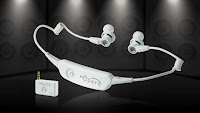
opera wireless headphonesWhenever I have to travel in a bus or flight, I make sure I have my iPod and Panasonic headphones tucked into my travel kit; but everytime I wish I had a pair of wireless headphones that can easily sit behind my head while I sleep and listen to my music, without all that wire-entangling mess! That would be such a cool gadget, not to mention comfortable too! So I was plesantly surprised to find that Opera Headphones using Kleer technology are designed for just this, and are perfectly matched for all the Apple iPods!

Made by Korean "company" DigiFi, the Opera is a headset that wraps around the back of your head — the 'buds are still tethered together, but there's no cord going from your ears to your iPod. Instead, you plug a Kleer wireless transmitter into your player's headphone jack and you're good to go. In fact, up to four people, each with Kleer earbuds, can tune into the same transmitter! Now that's cool!

So what is this Kleer technology I keep talking about? Well, its a wireless technology that claims to have better specifications than Bluetooth. It is optimized for high quality wireless audio transmission between portable audio devices. Kleer’s patented sub-sampling radio architecture combines lossless audio transmission, low-power consumption, low latency, and best-in-class ISM band co-existence to provide far superior audio quality with up to 10 times the battery life of a comparable Bluetooth solution. In the case of the Opera, all you need to do is plug in the Kleer wireless transmitter to the MP3 Player’s headphone jack, and the headphones will be synced wirelessly to your player.

RCA's Jetstream MP3 Player used the Kleer technology, and now Opera is the second revolutionary product designed on the same technology. The initial price of this wireless headphone is set at $98 for one kit (earbuds and transmitter, which might be a wee bit more than what one would wish to pay. But the product looks promising, and if they can get to a universal solution that works across multiple devices, Kleer technology's Opera Headphones may prove to have a lot of buyers, including me! So lookout for these when they are out in June 2008 - it's surely a neat way to make your iPod wireless!
Category: articles
opera wireless headphonesWhenever I have to travel in a bus or flight, I make sure I have my iPod and Panasonic headphones tucked into my travel kit; but everytime I wish I had a pair of wireless headphones that can easily sit behind my head while I sleep and listen to my music, without all that wire-entangling mess! That would be such a cool gadget, not to mention comfortable too! So I was plesantly surprised to find that Opera Headphones using Kleer technology are designed for just this, and are perfectly matched for all the Apple iPods!

Made by Korean "company" DigiFi, the Opera is a headset that wraps around the back of your head — the 'buds are still tethered together, but there's no cord going from your ears to your iPod. Instead, you plug a Kleer wireless transmitter into your player's headphone jack and you're good to go. In fact, up to four people, each with Kleer earbuds, can tune into the same transmitter! Now that's cool!

So what is this Kleer technology I keep talking about? Well, its a wireless technology that claims to have better specifications than Bluetooth. It is optimized for high quality wireless audio transmission between portable audio devices. Kleer’s patented sub-sampling radio architecture combines lossless audio transmission, low-power consumption, low latency, and best-in-class ISM band co-existence to provide far superior audio quality with up to 10 times the battery life of a comparable Bluetooth solution. In the case of the Opera, all you need to do is plug in the Kleer wireless transmitter to the MP3 Player’s headphone jack, and the headphones will be synced wirelessly to your player.

RCA's Jetstream MP3 Player used the Kleer technology, and now Opera is the second revolutionary product designed on the same technology. The initial price of this wireless headphone is set at $98 for one kit (earbuds and transmitter, which might be a wee bit more than what one would wish to pay. But the product looks promising, and if they can get to a universal solution that works across multiple devices, Kleer technology's Opera Headphones may prove to have a lot of buyers, including me! So lookout for these when they are out in June 2008 - it's surely a neat way to make your iPod wireless!
Category: articles

Tuesday, March 25, 2008

After losing to Verizon in the much-hyped spectrum auction, it is speculated that Google has written a letter to the FCC asking for permission to use the "White-Space" between channels 2 and 51 on TV sets (which is not used by cable services) to offer wireless broadband services. Such a move would offer up more coverage and maybe even faster, more reliable and affordable internet over air-waves. This could surely open a lot more possibilities for consumers, but what urges Google to take the lead?

Google was outbid by Verizon Wireless, but its not yet out of the game. Looks like it has already convinced the FCC to require the winner of a specific portion of the spectrum to allow subscribers to use any compatible wireless device they want. And now it has written a "public letter" to FCC urging it to open up the unused white-space for wireless internet. It feels that opening up the spectrum would enable the much-needed competition to the incumbent broadband service providers.

Google, who recently launched its own mobile OS called Android, is betting that it can boost its online advertising business by making it easier for mobile consumers to get access to the Internet on their mobile phones. But there's also a bit of speculation that Google has bigger plans, and it's push for an open space could be related to LTE and WiMAX technologies which would need space for the 4G network. And what's more, looks like this time the 2 giants Microsoft and Google are on the same side!! Bill Gates was quoted saying "I am hopeful that white-space will be made available so that Wi-Fi can explode in terms of its usage, even out into some of these less dense areas (of the United States) where distance has been a big problem for Wi-Fi."

As quoted by a company lawyer named Richard Witt, "Google would be willing to provide, at no cost to third parties, the technical support necessary to make these plans happen; This could include intellectual property and reference designs for underlying technologies, open geo-databases maintained by Google, and other supporting infrastructure. Of course we welcome others as well with an interest in helping to provide such support."

But the TV broadcasters are currently opposing the use of white space, fearing such usage would cause interference with television programming and could cause problems with a federally mandated transition from analog to digital broadcasting signals scheduled for Feb 2009. But Google in its letter urged the FCC to adopt a series of overlapping technologies, including "spectrum sensing," designed to prevent signals from interfering with each other. So for now, the war is on! Wait and watch to know who finally wins!


Category: articles
After losing to Verizon in the much-hyped spectrum auction, it is speculated that Google has written a letter to the FCC asking for permission to use the "White-Space" between channels 2 and 51 on TV sets (which is not used by cable services) to offer wireless broadband services. Such a move would offer up more coverage and maybe even faster, more reliable and affordable internet over air-waves. This could surely open a lot more possibilities for consumers, but what urges Google to take the lead?

Google was outbid by Verizon Wireless, but its not yet out of the game. Looks like it has already convinced the FCC to require the winner of a specific portion of the spectrum to allow subscribers to use any compatible wireless device they want. And now it has written a "public letter" to FCC urging it to open up the unused white-space for wireless internet. It feels that opening up the spectrum would enable the much-needed competition to the incumbent broadband service providers.

Google, who recently launched its own mobile OS called Android, is betting that it can boost its online advertising business by making it easier for mobile consumers to get access to the Internet on their mobile phones. But there's also a bit of speculation that Google has bigger plans, and it's push for an open space could be related to LTE and WiMAX technologies which would need space for the 4G network. And what's more, looks like this time the 2 giants Microsoft and Google are on the same side!! Bill Gates was quoted saying "I am hopeful that white-space will be made available so that Wi-Fi can explode in terms of its usage, even out into some of these less dense areas (of the United States) where distance has been a big problem for Wi-Fi."

As quoted by a company lawyer named Richard Witt, "Google would be willing to provide, at no cost to third parties, the technical support necessary to make these plans happen; This could include intellectual property and reference designs for underlying technologies, open geo-databases maintained by Google, and other supporting infrastructure. Of course we welcome others as well with an interest in helping to provide such support."

But the TV broadcasters are currently opposing the use of white space, fearing such usage would cause interference with television programming and could cause problems with a federally mandated transition from analog to digital broadcasting signals scheduled for Feb 2009. But Google in its letter urged the FCC to adopt a series of overlapping technologies, including "spectrum sensing," designed to prevent signals from interfering with each other. So for now, the war is on! Wait and watch to know who finally wins!


Category: articles
Fashion,Fashion Style Ttrends, hair Style, Fashion Style, Fashion Style Fashion,Fashion Style Ttrends, hair Style, Fashion Style, Fashion Style 2015